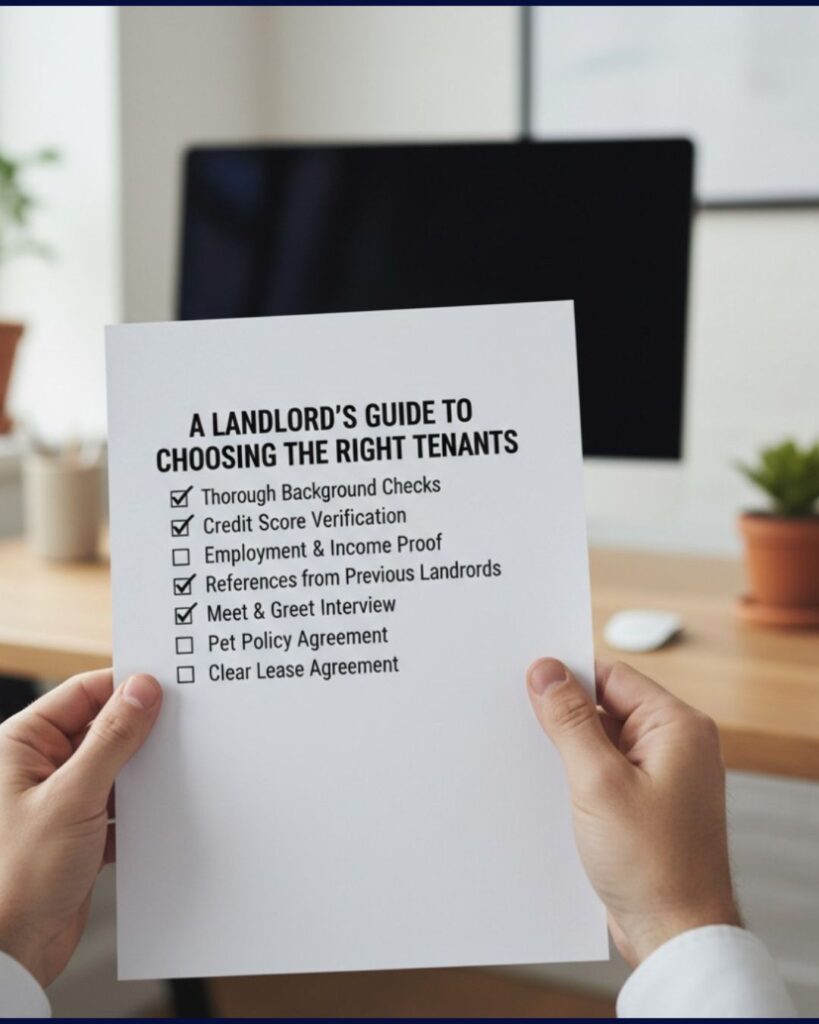
A Landlord’s Guide to Choosing the Right Tenants
Selecting the right tenant is one of the most important decisions you’ll make as a landlord. A reliable tenant pays on time, respects your property, and helps you maintain steady cash flow. On the other hand, the wrong tenant can lead to late payments, property damage, and costly evictions.
Here’s a practical, step-by-step guide to help you choose tenants wisely and protect your investment.
1. Start with a Clear Rental Criteria
Before you even list your property, define your minimum requirements. This ensures consistency and helps you avoid emotional decision-making.
Your rental criteria may include:
- Minimum credit score
- Income requirement (commonly 2.5–3x the monthly rent)
- Employment verification
- Rental history
- Background check standards
- Pet policy
Make sure your criteria comply with the U.S. Department of Housing and Urban Development Fair Housing guidelines and any local housing laws.
2. Pre-Screen Before Showings
Save time by pre-screening potential applicants before scheduling a showing. You can ask:
- When are you looking to move?
- How many occupants?
- Do you have pets?
- What’s your monthly income?
This helps filter out unqualified prospects early and reduces wasted appointments.
3. Require a Complete Rental Application
Always use a written rental application. It should collect:
- Full legal name
- Date of birth
- Social Security number (for screening)
- Current and previous addresses
- Employer information
- References
Incomplete applications should not be processed. Consistency is key.
4. Run Credit and Background Checks
A credit report shows:
- Payment history
- Outstanding debts
- Collections or bankruptcies
A background check may reveal:
- Criminal history (if allowed by local laws)
- Prior evictions
Look at the full picture. A low credit score due to medical debt may be less concerning than repeated unpaid rent.
5. Verify Income and Employment
Request:
- Recent pay stubs (last 2–3)
- Employment verification letter
- Tax returns (for self-employed applicants)
- Bank statements if necessary
The goal is to confirm stable income and the ability to consistently afford the rent.
6. Contact Previous Landlords
Speaking with former landlords can provide valuable insight. Ask:
- Did they pay rent on time?
- Did they maintain the property?
- Would you rent to them again?
- Did they give proper notice before leaving?
Be cautious if the only reference is the current landlord. They may give a positive review just to move a problematic tenant out.
7. Trust Patterns, Not Promises
Tenants may promise to improve credit or explain past issues. While empathy is important, rely on documented patterns rather than verbal assurances. Past behavior is often the best predictor of future behavior.
8. Follow Fair Housing Laws
Landlords must follow the Fair Housing Act, which prohibits discrimination based on:
- Race
- Color
- Religion
- Sex
- National origin
- Disability
- Familial status
Always apply the same standards to every applicant to avoid legal risk.
9. Document Everything
Keep records of:
- Applications
- Screening reports
- Approval/denial reasons
- Lease agreements
Proper documentation protects you in case of disputes.
10. Use a Strong Lease Agreement
Once you choose the right tenant, protect yourself with a detailed lease that clearly outlines:
- Rent amount and due date
- Late fees
- Maintenance responsibilities
- Rules on guests, pets, and property use
- Renewal terms
A well-written lease sets expectations from day one.
Final Thoughts
Choosing the right tenant isn’t about filling a vacancy quickly, it’s about securing long-term stability. By creating clear standards, screening carefully, and following fair housing laws, you reduce risk and increase the chances of a smooth landlord-tenant relationship.
A careful screening process today can save you thousands of dollars and countless headaches tomorrow.
If you’d like, I can also tailor this blog specifically for New Jersey landlords, including state-specific screening rules and eviction laws.