
Tips for Selling an Investment Property
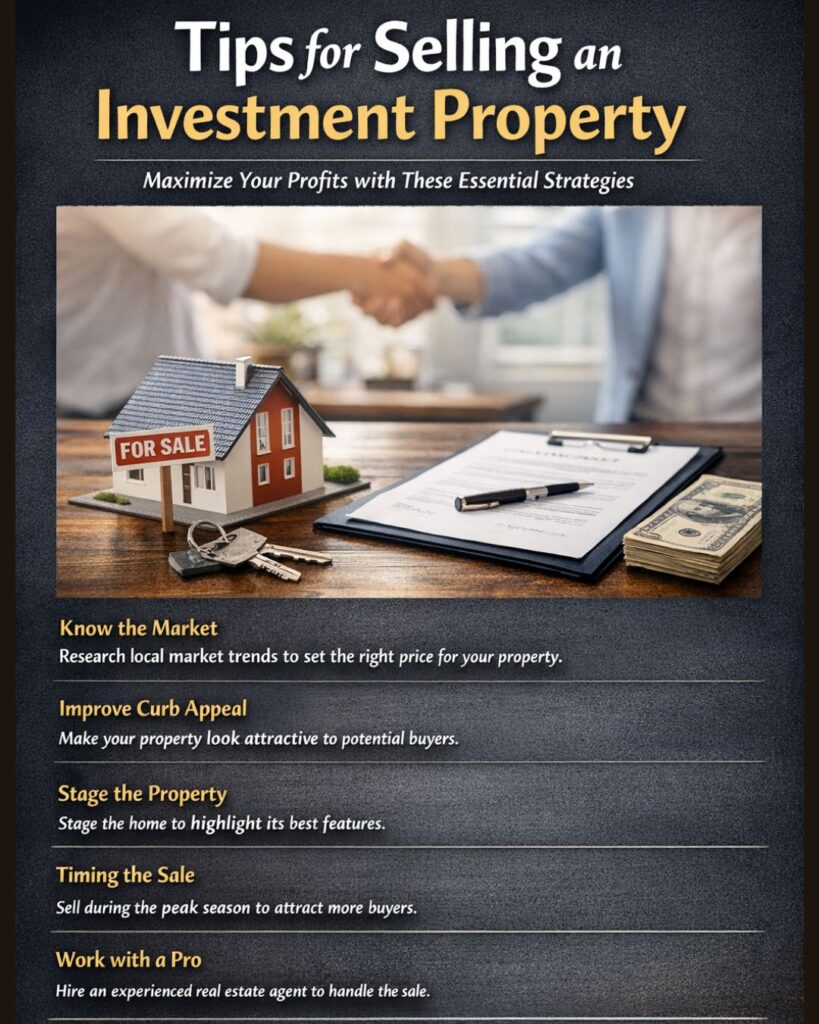
What You Should Know
Selling an investment property is a little different from selling your primary home. Buyers are often numbers‑driven, timelines matter, and your goal is to maximize return while minimizing stress. Whether you’re cashing out or reinvesting, here are smart, practical tips to help you sell successfully.
1. Know Your Numbers
Before listing, get clear on your financials. Review your purchase price, improvements, rental income, and expenses. Understanding your return on investment (ROI) will help you set realistic expectations and make confident decisions during negotiations.
2. Time the Market Strategically
Market timing can significantly impact your profit. Pay attention to local trends, interest rates, and buyer demand—especially for rental properties. Selling during a strong seller’s market can attract more investors and competitive offers.
3. Decide: Sell Vacant or Tenant‑Occupied
Both options have pros and cons:
- Tenant‑occupied properties appeal to investors looking for immediate cash flow.
- Vacant properties may attract a wider pool of buyers and allow for easier showings.
Review lease terms and local regulations before deciding.
4. Make Cost‑Effective Improvements
You don’t need a full renovation. Focus on updates that offer the best return, such as fresh paint, minor repairs, improved lighting, and curb appeal. A well‑maintained property signals lower risk to buyers.
5. Price It Right from the Start
Overpricing can cause your listing to sit, while competitive pricing can drive multiple offers. Work with a real estate professional who understands investment properties and can analyze comparable sales accurately.
6. Highlight Income Potential
Investors care about cash flow. Market the property with key details like rental income, expense breakdowns, cap rate, and upside potential. Clear, transparent numbers build trust and attract serious buyers.
7. Understand Tax Implications
Capital gains tax, depreciation recapture, and 1031 exchanges can all affect your bottom line. Consult with a tax advisor early so there are no surprises—and to explore strategies to defer or reduce taxes.
8. Work with the Right Real Estate Expert
An agent experienced in investment properties can market to the right audience, navigate tenant situations, and negotiate effectively. This expertise can make a significant difference in both price and smoothness of the transaction.
Final Thought: Selling an investment property is about strategy, not just the sale. With proper planning, smart pricing, and expert guidance, you can maximize your return and move confidently into your next investment.
Thinking of selling an investment property? Let’s talk about your options and goals.